
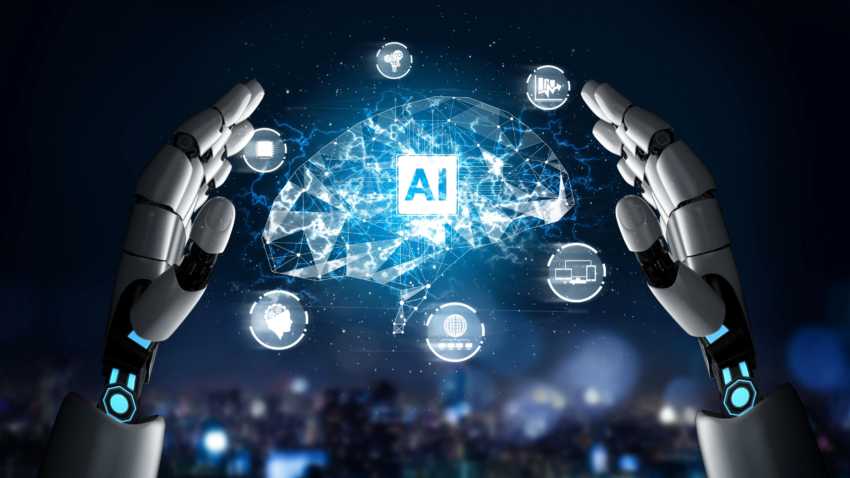
Benefits of AI
Imagine a world in which machines could create a world in which machines could. The idea was an idea of science fiction, and was confined to Isaac Asimov’s books as well as the imagination of computer scientists. Now, it’s the norm. The path of artificial intelligence from a theoretical idea to actual technology is one of the most impressive human accomplishments, bringing a wide variety of advantages.
A year ago, in 1956, a small group of scientists who were forward-thinking met in Dartmouth College for what would be a defining summer conference. Their goal was ambitious: to explore ways of capturing human intelligence through machines. Although they could not have anticipated the exact direction AI would take, their ideas set the stage for a revolution in technology that would change the entire structure of our society.
From the early days of basic pattern recognition software to today’s highly sophisticated neural networks, AI is evolving at an astounding rate. The breakthrough moment occurred over the last 15 years, when an amalgamation of four key elements — the exponential increase in computing capacity, accessibility of huge datasets, the emergence of revolutionary technological advances in machine learning algorithms, and the present development of the mainstream Generative AI (GenAI) softwareallowed AI to realise its full potential.
Today, AI’s influence is heard across the world. It helps us make our decisions via smartphone assistants, supports professionals in their work and safeguards our transactions with banks, and aids medical professionals in detecting diseases, to mention just a few. Perhaps more importantly, it is changing how we view the human potential. AI isn’t merely automating jobs and tasks; it’s also enhancing the capabilities of humans in ways that were previously not imagined.
Table of Contents
Benefits of AI
The benefits of AI aren’t limited to its technological advancedness. At its heart, AI represents a fundamental change in the way we approach solving problems and making decisions. In a world of massive amounts of data, AI acts as a cognitive extension, aiding us in making sense of the complexity that could otherwise overwhelm our capabilities.
Without AI’s capability to sort and analyse the data, we’d be drowning in data and aching to know. AI transforms this risk into a valuable asset, uncovering relevant patterns and delivering practical insight through the digital clutter.
Improved decision-making
Human brains, as amazing in their own right it is, are unable to process multiple variables simultaneously, which can result in human errors. AI systems excel in this kind of real-time, complex data analysis, analysing the impact of thousands of variables in milliseconds to determine the most effective solutions.
For instance, AI can help you mitigate risks. Identity verification, which is a major security risk that requires focus, has reached new levels of sophistication thanks to AI’s ability to verify customer identities across a variety of data points simultaneously. This method is particularly adept at identifying fake identities, which are a growing problem in the digital age as well as for security. Additionally, AI-powered risk assessment tools are constantly evolving to meet new patterns of fraud, drastically cutting false positives while also identifying more legitimate fraudulent attempts.
However, AI’s capabilities in decision-making go beyond the limits of speed and complexity. AI systems can detect subtle patterns that humans could overlook. For example, AI algorithms have discovered new combinations of drugs to treat resistance to diseases by analysing molecules in a way that could require human scientists decades to study.
Automation and efficiency
While the phrase “automation” may bring up images of robotic assembly line machines, the capabilities of AI’s automation are more advanced and sophisticated. Modern automation is the term used to describe AI tools that can assist in completing difficult tasks and free up professionals’ time and effort from repetitive tasks. However, a professional’s experience is still vital to ensure precise results.
Consider the legal sector as an example. It is experiencing a paradigm change thanks to AI. Legal firms of the present are using AI to transform document reviews by analysing thousands of legal documents within just hours, a process that used to require lawyers to complete for weeks. The legal AI technology will not just improve the efficiency of the process add unprecedented precision to legal research, by quickly joining relevant citations, precedents, and other information from huge databases of case law. This technology helps lawyers make educated decisions that will yield long-term benefits.
AI automation doesn’t just help save time; it changes the way companies allocate their resources. When AI can handle routine tasks, professionals can concentrate on tasks that require a lot of creativity, as well as emotional intelligence and strategic thinking, which are areas where human capabilities surpass AI.
Continuous learning and improvements
In contrast to traditional software, which is static, unless it is manually updated, AI systems have the incredible capacity to grow and improve by gaining experience. This capability of continuous learning means that AI solutions will become more useful as time passes, adjusting to new trends and challenges as they arise.
In a deeper look at tax compliance, it is constantly changing. It’s never been easier with AI-driven systems continually checking for changes in regulations across different areas. Tax solutions are extremely beneficial to tax professionals since they can not only identify the possibility of compliance issues, but they can also streamline the tax filing and reporting process in order to reduce the risk of costly errors. For planning strategies, AI analyses historical data to identify tax-saving opportunities. It can simulate different scenarios in order to maximise tax position.
To keep up with changing laws, tax codes that have been updated and fraudsters experimenting with new strategies, experts ensure that AI-enabled solutions are able to tackle the challenges head-on. This technology revolution isn’t only about automation – it’s about increasing human knowledge by utilising powerful tools to increase accuracy, efficiency, and productivity across these vital industries.
The advancement of human capabilities has reached new heights thanks to the advent of the concept of agent-based AI workflows. Agentic AI employs GenAI and large-language models that independently plan, think, make decisions, and carry out complicated processes. Through the creation of autonomous agents with specific objectives — for example, document writing or research systems can complete tasks and even check their work before submitting. Yet, professionals should still scrutinise the results to ensure accuracy.
AI’s Limitations AI
While we are embracing AI’s potential to transform our lives but we also need to be aware of its risks and limitations. It’s not about being afraid or resentful of change. It’s about making sure we implement AI efficiently and responsibly.
Dependency
At its heart, AI is only as efficient as the information it is able to learn from, which has several crucial issues. The first is that AI algorithms require large quantities of data that are high-quality data in order to work effectively. This data could be inaccessible or inconsistent in a variety of real-world applications. An AI system that has been trained using flawed or limited data is bound to perpetuate and may even increase the errors in its decision-making.
In addition, in spite of its incredible advantage, Artificial Intelligence systems aren’t without errors — and the ability to be inaccurate poses significant problems. AI models are susceptible to errors when they encounter situations that are not in their data sources, which can lead to incorrect advice or false conclusions.
Context gap
Although AI excels in pattern recognition and tasks, it has trouble understanding context, as humans do naturally. AI may be able to beat the world champion in chess, but not be able to comprehend the reason why a child may allow their younger sibling to take the lead in the game. This lack of understanding of wider details and nuance could result in erroneous or uninformed decisions when confronted with difficult real-world scenarios.
Ethics and ethical aspects
Although AI can provide revolutionary advantages across industries, it has important ethical issues that require our focus. If AI systems are handling sensitive financial and personal information, security measures are crucial to safeguard individuals’ rights and address privacy concerns with data. It is imperative to be aware of the possibility of bias in algorithms to ensure that AI systems don’t exacerbate or increase existing social inequities.
There’s also the crucial issue regarding transparency and accountability. When AI takes or is influenced by significant decisions, it is important to make sure we know the process by which it makes these decisions and who is accountable for these decisions. It is important to consider the human aspect of AI, although it is a pro in the processing of huge amounts of datasets, human supervision is vital for understanding context and ethical decisions.
To introduce AI into delicate areas, organisations must find an appropriate balance between taking advantage of technological advancements while ensuring moral standards that safeguard individual rights, promote fairness and safeguard the dignity of human beings.
This is the point where an AI assistant can help. In light of the ethical issues concerning AI, choosing the best AI assistant is an important choice for any company.
Choosing an AI assistant
An efficient AI assistant must provide measurable benefits and offer a wide variety of benefits in many dimensions. Beyond just tasks, it will improve decision-making capabilities, increase the efficiency of operations, and also save time for experts to work more in other areas.
The selection of the best AI assistant is a careful evaluation of many important factors. First, the assistant’s capability to deliver accurate and relevant responses to your particular industry. For instance, if you are an attorney, it is crucial to ensure that lawyers create an AI assistant that can complete the duties you are likely to face. However, aspects like the user interface, capabilities for integration and security capabilities are also crucial when selecting the right AI assistant.
Why is CoCounsel important?
If you are looking for a dependable GenAI advisor, you’ll have to select one that is professional, that is, it comprehends the specifics of professional work and can assist you in understanding the complexities. In this regard, we’ll show you CoCounsel.
A GenAI assistant, CoCounsel, provides multiple benefits. It is able to conduct sophisticated analysis, look up massive or dense data, and provide quick, exact and reliable responses.
This software should stand out for those who are looking for a complete and adaptable solution. Contrary to other AI tools that are focused on a single task, we’ve designed CoCounsel to handle entire workflows with seamless integration and improved efficiency.
With AI rapidly changing the tax, legal, accounting, as well as the risk and fraud fields, and with clients expecting more than ever, having an AI assistance you can count on is essential. We are the top technology provider for decision-makers in an ever-changing world. We continue to innovate and advance AI technology to help you understand today’s challenges and navigate the future with complete confidence.