AI’s Effects on the Manufacturing Sector
Artificial Intelligence is revolutionizing manufacturing processes by boosting efficiency, improving the design of products, and streamliningthe supply chain. Find out how manufacturers can leverage AI and data management for their products to improve their product design faster and offer extraordinary customer experiences.
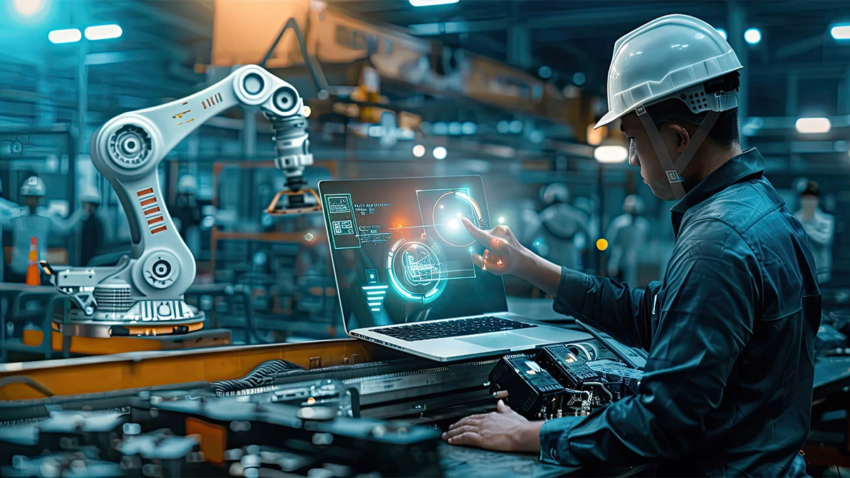
Manufacturing isn’t what it used to be. The factory floor has swapped clipboards and machine checks regularly for more sophisticated machines that never stop for a moment.
In reality, 48% of companies are now using AI-driven predictive maintenance to prevent breakdowns before they happen.
Artificial Intelligence has becomeana efficient engine for advancement and has taken over routine tasks that humans were not willing to undertake. While the most prominent applications of AI are usually within the areas of customer-facing, ng such as commerce and marketing, the technology may be used behind the scenes to keep the production lines running and the manufacturing sector evolving at speed.
What Is Artificial Intelligence In Manufacturing?
AI in manufacturing is the application of AI algorithms such as machine learning, machine learning, and other AI systems to aid and improve each stage of manufacturing. In contrast to traditional automated manufacturing, which adheres to strict rules, AI can process large and complex streams of data that can be adapted in real time and reveal the insights that traditional systems fail to see.
At its heart, AI in manufacturing is not about replacing human labor but merely adding an intelligent layer to the processes already in place. AI models are designed to detect patterns and manage huge amounts of data beyond the capabilities of traditional tools. The result is a production procedure that’s more flexible and robust.
In contrast to older systems that were governed by rigid guidelines, AI introduces flexibility and continuous learning, which gives companies the ability to remain competitive in the face of changing customer expectations and technology that is constantly evolving.
The Impact AI Has On the Manufacturing Industry
Increased Efficiency
AI transforms effectiveness in the production sector by enabling predictive maintenance and automated processes that cut down on downtime and speed up production lines. Through the ability to predict maintenance and repair, AI algorithmic systems monitor the condition of machines in real-time by identifying indicators of breakdowns in the beginning, and permitting scheduled repairs prior to breakdowns occurring.
An excellent example is Siemens MindSphere, an industrial IoT and AI-powered platform that connects factory equipment, gathers sensor data, and can predict problems before they occur. By recommending optimal repair plans and monitoring the performance of assets, MindSphere helps manufacturers avoid expensive disruptions and maintain peak performance.
However, the efficiency of manufacturing isn’t restricted to the health of machines alone. AI systems can also automate repetitive tasks that previously required human effort, which allows workers to concentrate on more strategic tasks. From changing the settings of equipment at a moment’s notice to optimizing processes,s AI software ensures that every step of the manufacturing process is efficient. The result is a speedier process that is able to adapt to the changing needs without delay!
Improved Safety Standards
AI-powered monitoring systems are able to monitor factories in real-time, alerting workers to dangers like overheating machinery, chemical leaks, or dangerous behaviors. By alerting teams in advance,e the systems can stop incidents before they become dangerous by keeping workers and people safe from harm’s way.
IBM Maximo Visual Inspection, an AI-powered instrument within IBM Maximo Application Suite (MAS), IBM Maximo Application Suite (MAS) is a great illustration of the improved safety standards in the real world. It makes use of computer vision to identify and flag unsafe situations on the floor of factories. When combined with predictive analyses, products like this offer manufacturers early warnings, improve the safety standards that are in place, and provide safer working conditions.
Beyond the immediate detectability, AI models process data from sensors and past incidents to identify the risks and ensure safety standards are adhered to. When it comes to forecasting fatigue in equipment or identifying hazards, AI applications reinforce a culture of safety that minimizes liability and provides a more secure workplace for all.
Creation of Digital Twins
The digital twin technique is the process of creating an electronic replica (or “twin”) of an actual asset, machine, process, or other. This model of virtual reality is connected to real-world equipment via sensors or IoT devices, which allows it to replicate performance in real-time. Because it constantly receives real-time data, the digital twin acts exactly like the physical object that it represents and is a great instrument for experimenting and gaining insight.
By using this method, companies can run tests and analyse data in a safe digital environment before implementing modifications to the actual system. The factory can simulate the way a new process will alter output, or even stress-test machines in virtual space to discover any weaknesses that could be present to reduce the time required and avoid costly errors that can result from testing in real production.
Digital twins can be stronger when they are combined with AI. When the twin creates its virtual models, AI algorithmic models predict the outcome and constantly improve simulations. This transforms digital twins from static replicas to AI-driven systems that can improve workflows and suggest enhancements to ensure long-term sustainability!
BMW’s iFactory strategyiss an example of this idea that is in use, using digital twins that are enhanced by AI to develop and test manufacturing systems before they are put on the floor. Through creating a digital mirror of its manufacturing facilities, BMW can fine-tune workflows and ensure sustainability targets are achieved, without affecting production in real-time.
Enhanced Design
When it comes to designing, AI adds both intelligence and a sense of creativity into the equation! AI systems analyze huge amounts of data (such as preferences of customers and trends in the market) to suggest changes to the design of products. Instead of relying on their own intuition, engineers get insights based on data that speed up innovation and minimize the risks of trial-and-error development.
An excellent example in the manufacturing sector includes Autodesk Generative Design, which makes use of AI algorithms to investigate a myriad of designs in relation to performance goals and constraints. This allows manufacturers to quickly identify optimized designs that are more durable with fewer materials.
Beyond optimizing, AI also speeds up the entire process of designing by transforming concepts into prototypes that can be built in record time and improving capabilities while leaving less space for waste! The result is that AI-driven design increases human creativity and accelerates the process of translating ideas into solutions capable of production faster than ever before.
Simplified Supply Chain and Inventory
Supply chain management is among the most complicated components of manufacturing, and AI has proven to be a huge help for making the supply chain more reliable and robust. AI solutions that are powered by machine learning allow manufacturers to forecast demand with greater precision and help them optimize the quantity of inventory and prevent shortfalls as well as overstock.
Beyond efficiency, AI brings a brand new degree of transparency. Manufacturers can now observe every step of their manufacturing process to ensure compliance while identifying bottlenecks and addressing them immediately. This is particularly important as Digital Product Passport (DPP) legislation takes force in 2026 and demands an unprecedented amount of transparency in the supply chain and collaboration.
A solution such as Akeneo’s Supplier Data Manager (SDM) can be extremely beneficial in capturing and optimizing the data on products collected across the entire supply chain. SDM replaces manual, inefficient processes using AI-driven automation, which streamlines supplier data exchange and enrichment procedures. With shared templates and flexible workflow,s suppliers can integrate product data on a large scale, while manufacturers can assure accuracy and consistency before uploading the data to Akeneo PIM.
Quality Control
Quality control is among the areas in which AI has the greatest immediate impact. The traditional inspection techniques depend on oversight by humans and manual checks that can fail to spot subtle weaknesses.
An excellent example of one of these is LandingLens, created by LandingAI.It is a tool that utilizes computer vision to examine the product in real time and spot defects that would otherwise be overlooked. By reducing recall and improving accuracy, these tools aid manufacturers in delivering top-quality products on a large scale and guarantee that their products are reliable in every step of manufacturing.
Sustainability
With nearly half of customers willing to pay a premium of 25% for a business that can clearly convey its sustainability policies, it’s no surprise that more retailers and manufacturers are seeking ways to collect, monitor, and then share this data.
From reducing waste materials to reducing energy consumption,n AI-powered systems can improve production schedules and use of resources by reducing environmental impact,ct butnot sacrificinge efficiency. One example of this can be found in Microsoft AI for Sustainability, which gives real-time insight into the use of energy and emissions that allow manufacturers to monitor their carbon footprint and then take action.
The benefits extend beyond the compliance aspect. AI can help manufacturers create processes that are efficient and responsible, thus reducing costs and ensuring that they are in line with consumer demands and regulations for more sustainable methods. Incorporating AI into everyday processes allows manufacturers to present themselves as innovative and responsible in proving that innovation and sustainability can go together.
AI Is Redefining Manufacturing
From predictive maintenance to digital twins to resilience of supply chains, AI is changing the entire structure of manufacturing. With platforms such as SDM, manufacturers can take this intelligence outside of factories and into their product data, guaranteeing the highest level of efficiency and accuracy.
The future of production is with businesses that accept AI as an important partner. Companies that invest now are the best placed to provide consistent customer experiences and confidently move into the next phase of commerce.