
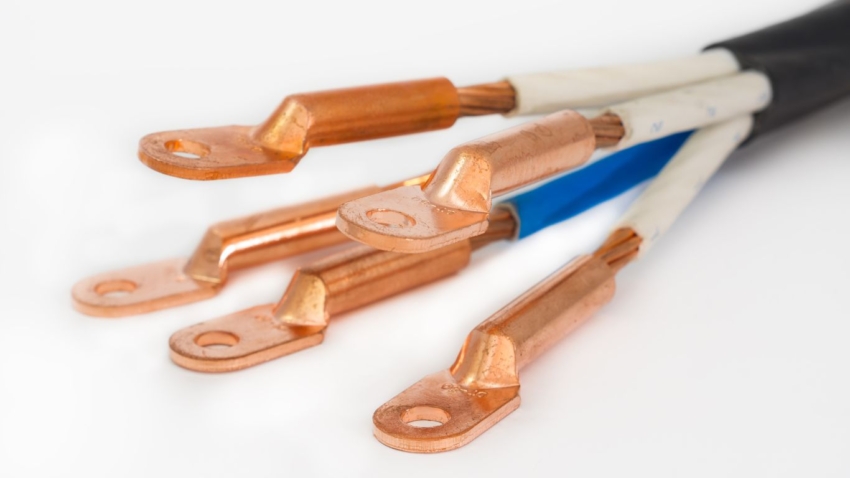
How Tinned Copper Lugs Resist Corrosion and Extend Wire Life
In the world of electrical engineering and industrial wiring, the longevity of a system is often determined by its weakest link. While high-quality cables and advanced circuit breakers receive much of the spotlight, the humble connector—specifically the cable lug tinned copper variety—plays a critical role in maintaining system integrity.
Choosing the right termination method is not just about ensuring a fit; it is about protecting the conductor from environmental degradation. For professionals working in marine, automotive, or industrial environments, understanding why tinned copper lugs are superior to bare copper alternatives is essential for preventing premature failure and reducing maintenance costs.
The Vulnerability of Bare Copper
Copper is the gold standard for electrical conductivity, surpassed only by silver. However, copper has a significant biological “appetite” for oxygen. When bare copper is exposed to the atmosphere, it undergoes a chemical reaction known as oxidation.
In a typical dry environment, copper develops a thin layer of copper oxide. While this layer provides a small amount of protection, it is highly resistant. In moist or saline environments, this process accelerates into galvanic corrosion. As the surface of the wire and the lug oxidizes, electrical resistance increases. This resistance generates heat, which further accelerates the oxidation process, eventually leading to a “thermal runaway” scenario where the connection fails or, in extreme cases, causes a fire.
What are Tinned Copper Lugs?
A cable lug tinned copper connector is a standard high-purity copper lug that has been coated with a thin layer of tin, usually through an electroplating process.5 This micro-layer of tin acts as a sacrificial and protective barrier.
Tin is naturally resistant to oxidation and corrosion. By enveloping the copper in this protective “envelope,” manufacturers create a component that retains the incredible conductivity of copper while gaining the environmental resilience of tin.
The Electroplating Process
The process involves cleaning the copper lug to remove any impurities and then immersing it in a chemical bath where an electric current deposits a uniform layer of tin. This ensures that even the interior barrel of the lug—where the wire is actually crimped—is protected.
How Tinned Copper Lugs Resist Corrosion
The primary reason to specify tinned copper lugs is their ability to withstand harsh conditions that would destroy bare copper in months.
1. Protection Against “Green Plague.”
In marine environments or areas with high humidity, copper reacts with moisture and carbon dioxide to form copper carbonate (the green patina seen on old statues). In an electrical connection, this “green plague” is a disaster. It wicks up into the strands of the wire, increasing brittleness and resistance. The tin coating prevents this reaction from ever starting.
2. Preventing Galvanic Corrosion
When two dissimilar metals touch in the presence of an electrolyte (like salt water), one metal will corrode faster than the other. Tin sits at a strategic point on the galvanic scale, making it more compatible with various types of hardware and mounting surfaces, thereby reducing the risk of electrolytic breakdown at the contact point.
3. Humidity and Chemical Resistance
Industrial settings often involve exposure to sulfur, acidic vapors, or heavy moisture. Tin is remarkably stable in these conditions. By using tinned copper lugs, you ensure that the interface between the cable and the terminal remains gas-tight and chemically stable.
Extending Wire Life: The “Wicking” Effect
The benefit of using a tinned lug extends beyond the connector itself; it actually protects the cable it is attached to.
When a bare copper lug begins to corrode, the oxidation doesn’t stay at the terminal. Through a process known as capillary action, moisture can be drawn up under the insulation of the wire. This causes the internal copper strands to corrode inches or even feet away from the actual connection point.
By using a high-quality tinned copper lug and a proper crimp, you create a seal. Because the tin does not oxidize, the “entry point” for corrosion is effectively closed. This keeps the internal copper strands of the cable bright and conductive for decades, significantly extending the service life of the entire wiring harness.
Performance Benefits in High-Vibration Environments
Beyond chemistry, there is a mechanical advantage to tinning. Tin is a relatively soft metal. When a cable lug tinned copper is crimped onto a conductor, the tin layer deforms slightly, “flowing” into the microscopic voids between the wire strands and the lug wall.
This creates:
- Greater Surface Area Contact: Reducing the electrical resistance (Voltage Drop).
- Improved Mechanical Bond: The slight “malleability” of tin helps the lug grip the wire more effectively, which is vital in automotive or vibration-heavy machinery.
Applications: Where Tinned Copper is Mandatory
While you can use tinned copper lugs in any application, they are considered mandatory in several specific sectors:
| Industry | Why It’s Necessary |
|---|---|
| Marine | Salt air and constant moisture lead to rapid copper oxidation. |
| Solar/Outdoor | Exposure to temperature swings and condensation requires weather-proof terminations. |
| Battery Systems | Off-gassing from lead-acid batteries creates an acidic environment that eats bare copper. |
| Wastewater Treatment | High levels of hydrogen sulfide quickly degrade standard electrical components. |
Conclusion
Investing in tinned copper lugs is a classic example of “doing it right the first time.” While bare copper lugs may be slightly cheaper upfront, the long-term costs of system downtime, heat-related damage, and premature cable replacement far outweigh the initial savings.
By providing a robust barrier against oxidation and chemical attack, a cable lug tinned copper ensures that your electrical systems remain cool, efficient, and reliable for their intended lifespan. Whether you are wiring a blue-water cruiser or a factory floor, tin-plated connectors are the professional’s choice for a permanent, high-performance connection.